


Body Armor: Plates, Soft Armor and Carriers

Updated: 50m
Last updated: November 17, 2026, Pacific Time. Product details come from each product page; check the page for current price, sizes, finishes and stock.
Quick answer: Body armor comes in two main types. Soft armor, such as Level IIIA panels, is made for handgun threats. Hard plates in steel, polyethylene or ceramic are made for rifle threats and ride in a plate carrier. Prepper Shop stocks both, plus carriers, side plates, backpack panels and trauma pads, so you can build a complete setup in one order.
Watch the 25-second spot. The opening shot is AI-generated; the product shots are our own listing photos and licensed stock images.
Not getting shot matters more than shooting the bad guy
As James Yeager puts it, not getting shot matters more than shooting the bad guy. The line is his, and we're quoting it with credit. James Yeager isn't affiliated with Prepper Shop and doesn't endorse it.
It's a simple idea with a practical edge. Most defensive gear is about what you can do to a threat. Body armor is about what happens to you if the worst day arrives anyway. It's the one piece of gear you put on before you need it, and it protects the part of your body it covers, up to its rating.
This guide walks through every kind of body armor Prepper Shop carries: hard plates, soft panels, plate carriers, side plates, backpack panels and trauma pads. It explains what each one does, how the levels work and how to match a setup to the threats you actually expect.
How body armor levels work
Most body armor in the United States is described with the protection levels from the National Institute of Justice (NIJ) standard 0101.06. These are the levels you'll see on the products below:
Level IIIA: tested with .357 SIG and .44 Magnum handgun rounds. This is soft armor, and it isn't rated for rifle rounds.
Level III: tested with 7.62x51 mm M80 ball rifle ammunition. This is hard armor, usually a plate.
Level IV: tested with .30-caliber M2 armor-piercing rifle rounds. This is also hard armor, usually a ceramic plate.
The Predator Armor plates and panels we sell carry the maker's own rating to those test methods. NIJ keeps a separate Compliant Products List, and the Predator Armor models we carry aren't on it, so we describe them as the maker's rating. Prepper Shop doesn't test or certify armor. Pick the level that matches the threats you expect, and remember that armor protects only the area it covers. You can read the standard yourself in the NIJ guide to armor protection levels and the NIJ Standard 0101.06.
Hard plates: steel, polyethylene and ceramic
Hard plates are the rifle-rated part of a setup. They slide into the front and back pockets of a plate carrier. Every plate below is made in the USA by Predator Armor of Utah and ships from its warehouse.
Steel plates
The Level III Steel Plate, Multi-Curve is a single front or back plate in 0.25-inch ballistic steel, cut in a shooter's shape with a multi-curve profile. Predator Armor rates it Level III and says it was tested by NTS-Chesapeake with 7.62x51 mm M80 ball at 2,780 feet per second. You can choose a Base Coat finish or a Kevlar Wrapped finish, a Kevlar-lined coating for frag mitigation. It fits carriers built for standard 10x12 plates. Steel is usually the heaviest of the three plate types, so check the weight against how long you plan to wear it.

Polyethylene plates
The Level III Polyethylene Plate is one plate made of polyethylene (UHMWPE) in a multi-curve shape for comfort and movement. The maker lists it at about 3.3 pounds and 1 inch thick, and rates it Level III. If you'll carry or wear plates for hours, the lower weight is the main reason to choose polyethylene over steel.

Ceramic plates
The Level IV Ceramic Plate is a single shooter's cut plate made of ceramic and Kevlar. The maker lists it at about 7 pounds per plate, rates it Level IV and lists a 10-year warranty period. It's the plate to look at if armor-piercing rifle rounds are on your threat list.

Side plates
The Level III Steel Side Plate, 6x6 is a 6x6 steel side plate, priced and sold per plate, made from 0.25-inch ballistic steel and rated Level III by the maker. It comes in the same Base Coat or Kevlar Wrapped finishes. It's made for carriers with side-plate pockets, which are sold separately. A 6x6 plate covers only a small area, so it adds coverage at your sides without turning your setup into a different kind of armor.

Hard plate comparison
Plate | Maker rating | What stands out |
|---|---|---|
Level III Steel Plate, Multi-Curve | Level III | 0.25-inch ballistic steel; Base Coat or Kevlar Wrapped finish |
Level III Polyethylene Plate | Level III | About 3.3 lb and 1 inch thick (maker figures) |
Level IV Ceramic Plate | Level IV | Ceramic and Kevlar; about 7 lb; 10-year warranty period listed |
Level III Steel Side Plate, 6x6 | Level III | Small 6x6 plate for side pockets; sold per plate |
Soft armor: Level IIIA panels
Soft armor is thin and flexible, so people wear it for long stretches. The trade-off is that Level IIIA is a handgun level and isn't rated for rifle rounds. Soft panels are the right starting point if handguns are the threat you plan around and comfort matters most.
Level IIIA soft panel
The Level IIIA Soft Panel, 10x12 is a single 10x12 insert, made in the USA, with a thin, lightweight build. Predator Armor says it was tested against 9mm, .357 SIG and .44 Magnum handgun rounds, and names NTS-Chesapeake as its test lab. It slides into a carrier with a 10x12 pocket, so one panel goes in front and one in back.

Concealable package
The Level IIIA Concealable Package is the all-in-one starter. It includes one Concealable Plate Carrier and two Level IIIA soft armor panels. The carrier is low-profile, made to wear under a button-up shirt or jacket, and built from a nylon blend with an elastic cummerbund.

Backpack panel
The Level IIIA Backpack Panel is a 10.5 by 14 inch Level IIIA soft armor insert sized to fit in a backpack. It's thin and lightweight. NIJ doesn't test backpack armor, so think of it as a maker-rated extra layer for a pack you already carry, not a replacement for armor you wear.

Plate carriers
A plate carrier is the vest that holds your plates and panels on your body. Every carrier we sell is carrier only: plates are sold separately, and the carrier itself provides no ballistic protection. Before you buy, check the size of your plates against the carrier's plate pockets.
MOLLE plate carrier
The Rothco MOLLE Plate Carrier has front, back and side plate pockets and heavy-duty MOLLE webbing so you can attach pouches. It's built from polyester and nylon, with a breathable padded mesh interior, adjustable shoulder straps and a detachable cummerbund with quick-release buckles. It comes in several colors, so open the product page to pick yours.

Laser Cut plate carrier
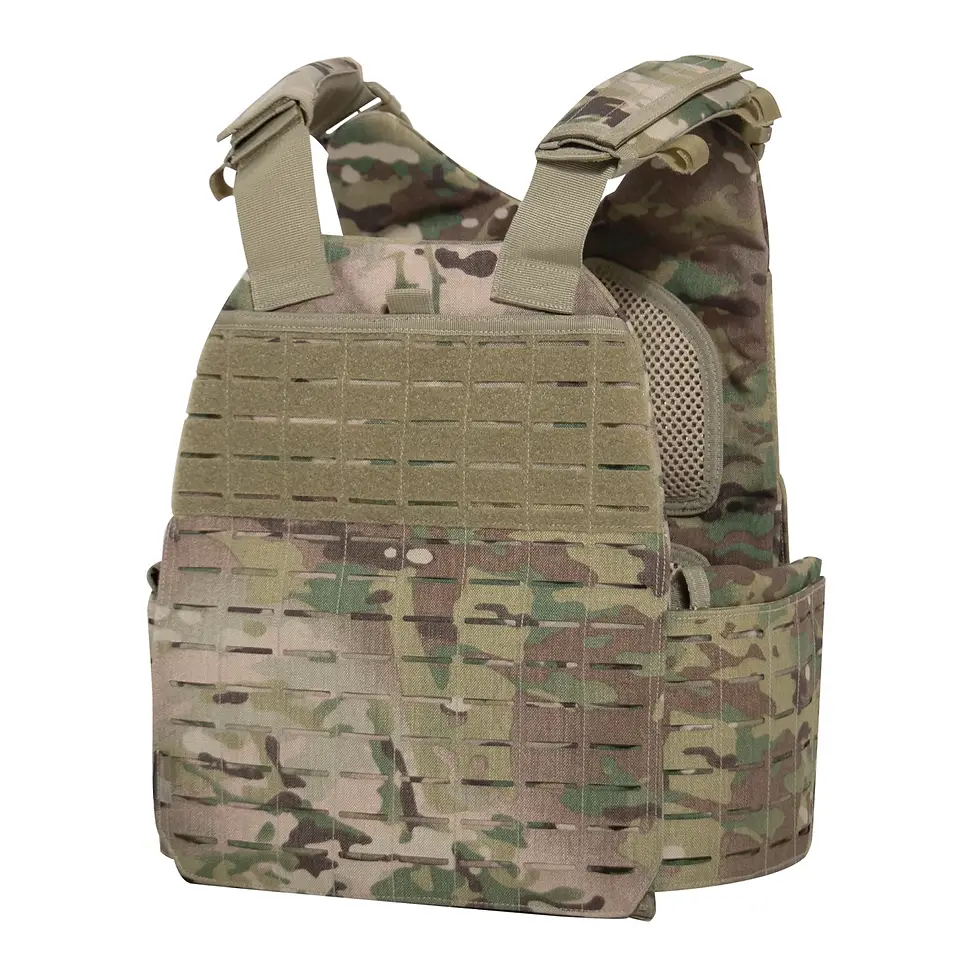
The Rothco Laser Cut Plate Carrier is a MultiCam carrier in 1000D Cordura nylon. Its front and back pockets fit Medium or Large Swimmer, SAPI and ESAPI cut plates up to 10.25 by 13.25 inches, according to Rothco. It has 14 rows of laser-cut MOLLE front and back, a detachable cummerbund with 5 rows of MOLLE per side, and quick-release shoulder straps with removable pads.
Concealable carrier
The Predator Armor Concealable Carrier is Predator Armor's empty concealable carrier, sold without plates or panels. It's lightweight and low-profile, made to wear under a button-up shirt or jacket, in a nylon blend with an elastic cummerbund around the sides.

Trauma pads
A trauma pad is worn inside the carrier, behind the armor. The Trauma Pad, 10x12, Non-Ballistic is made of high-density, flexible material that, per Predator Armor, spreads out the impact energy from a hit on the armor, and it adds padding and comfort. It doesn't stop bullets and isn't armor itself.

How to choose a setup in five steps
Pick the threat you plan around. Handgun threats point to Level IIIA soft armor. Rifle threats point to Level III or Level IV hard plates in a carrier.
Decide how long you'll wear it. Soft panels and a concealable carrier suit long days. Plates add weight, and polyethylene is lighter than steel or ceramic.
Match the plates to the carrier. Compare your plate size to the carrier's pocket size before you order. Standard plates are 10x12, and the Laser Cut carrier takes plates up to 10.25 by 13.25 inches.
Add the extras. A trauma pad goes behind the armor, side plates add coverage at your sides, and a backpack panel turns a pack you already carry into an extra layer.
Remember coverage. Armor protects only the area it covers. A good setup also includes a plan, training and a first aid kit.
Who can buy body armor and where we ship
Body armor purchase laws vary by state. You must be 18 or older, and by ordering you confirm that you're legally allowed to buy and own body armor where you live. Federal law (18 U.S.C. 931) prohibits anyone convicted of a felony crime of violence from buying, owning or possessing body armor, and some states add their own rules, such as California Penal Code 31360. We ship body armor only to the lower 48 states and Washington, D.C., and not to New York or Connecticut. Body armor orders are reviewed before shipping. Predator Armor items ship directly from Predator Armor's warehouse, their typical lead time is 2 to 3 days before an order ships.
Frequently asked questions
What's the difference between Level IIIA, Level III and Level IV body armor?
Level IIIA is soft armor tested with handgun rounds (.357 SIG and .44 Magnum). Level III is hard armor tested with 7.62x51 mm M80 ball rifle ammunition. Level IV is hard armor tested with .30-caliber armor-piercing rifle rounds. Higher levels cover tougher threats and usually weigh more.
Should I buy soft armor or hard plates?
Choose by threat and wear time. Soft Level IIIA panels are thin, light and can be worn under clothing, but they're not rated for rifle rounds. Hard plates in Level III or Level IV are made for rifle threats, and they're heavier. Many people combine plates with soft panels.
What's the difference between steel, polyethylene and ceramic plates?
Steel plates are durable and usually the heaviest. Polyethylene plates are the lightest of the three, about 3.3 pounds for our Level III plate. Ceramic plates reach Level IV and weigh about 7 pounds each. Check the product page for the finish and size options.
Do I need a plate carrier?
Yes. Plates and soft panels need a carrier to hold them on your body. The carriers we sell are empty, so plates are bought separately, and the carrier itself provides no ballistic protection.
What is a trauma pad and do I need one?
A trauma pad is a non-ballistic pad worn behind the armor. It doesn't stop bullets. Per Predator Armor, it spreads out impact energy from a hit on the armor and adds comfort. It's an optional add-on.
Can I use a backpack panel instead of a vest?
A backpack panel is a Level IIIA soft armor insert for a pack. NIJ doesn't test backpack armor, so treat it as a maker-rated extra layer for the pack you carry and not a replacement for armor you wear.
Who can buy body armor, and where do you ship it?
You must be 18 or older and legally allowed to buy and own body armor where you live. We ship body armor to the lower 48 states and Washington, D.C. only, and not to New York or Connecticut.
Related guides
First aid kit vs trauma kit: what to pack for serious bleeding and injuries.
How to pack a medical bag: the supplies that belong next to your armor.
Get home bag checklist: gear for getting back to your family.
Bug out bag checklist: the full evacuation kit.
Get home bag vs bug out bag: which one you need first.
Sources
National Institute of Justice, Understanding NIJ 0101.06 Armor Protection Levels.
National Institute of Justice, Ballistic Resistance of Body Armor, NIJ Standard-0101.06.
Product facts come from each Prepper Shop product page and the maker's listed figures.
Gear up before you need it. Shop body armor at preppershop.com.
Get the Level IIIA Concealable Package
One concealable carrier and two Level IIIA soft armor panels, the all-in-one starter. The product page always shows the current price and availability. Buyers must be 18 or older. Ships to the lower 48 states + DC, not to New York or Connecticut.
Get Ready Now: Shop Emergency Disaster Products
Stock up on essential emergency supplies today — food, water, shelter, and more. Be ready for anything.


Comments